
The Right Against AI
Or why workers should have the right to opt out of AI

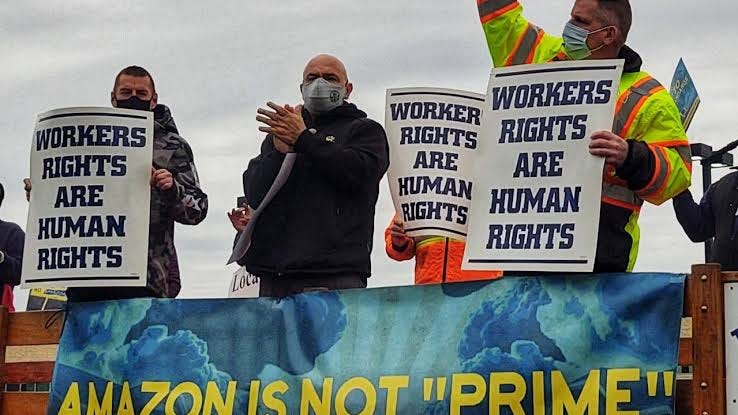
Yesterday, on a walk with a close friend who had some reservations about her current job, I asked her a question. “If you could wave a magic wand and change one thing about your job, what would it be?” Her immediate answer: “I would want to use AI at work less.”
Personal details redacted, my friend works in marketing for an industry that is not typically associated with AI. But even her job has been overtaken: she told me that the number of blog posts she’s expected to produce are of a quantity unthinkable without the gratuitous use of AI. My friend has pride in her work. She has a desire to resist. But she also has a desire to keep her job.
Her fear also went deeper than simply a dislike of the technology. “I think it’s making me dumber.” I couldn’t do anything but agree. When I have, in periods of my life, felt an overreliance on Claude, I have found my intelligence waning. Thinking becomes evanescent: no narratives persist, no convictions arise, no dreams are deferred. This phenomenon is known, poetically, as cognitive atrophy in the literature. It refers to the loss of brain plasticity and neuronal activity concomitant with the use of artificial intelligence.
She wasn’t the only person I’ve talked to recently who has expressed frustration at the expectation from their jobs that they will use AI. Other friends have told me AI use is now part of their promotion rubrics, a skill that you can be graded on in the same way you can be graded on, say, analytic competency or strategic thinking. Jobs have used the existence of AI tools as a way to demand more from workers. With terrifying prescience, Marx once wrote machinery had failed as a tool of liberation because it induced longer working hours in pursuit of increasing surpluses, an effect of the capitalist system the machinery belonged to. In much the same way, AI has not become the emancipation of the worker but rather their undoing.
It is in this light I propose a somewhat radical thought experiment. Imagine if, as workers, we had the right against AI. Phrased another way, this would become the right to opt out of AI. Under this right, you could not be fired from your job for refusing to use AI. Your quotas and your performance expectations would be dependent instead on what an unassisted human could do in the same amount of time. Companies would be required to carry out their evaluations against the specter of the unassisted human, rather than the man-machine chimera we’ve been forced to accept.
The benefits of such a right would be far-reaching. On the personal side, workers would be able to choose how, when, and why to use AI, rather than having it thrust upon them. The reduction in cognitive atrophy among the population would almost certainly be a net benefit for society. There would be further positive externalities: we’d almost certainly be able to cut down on AI use, lessening our need for ever-increasing power requirements and data centers that dot the land like headstones.
There is some precedent for this kind of practice within our current labor laws. Many of these laws—inked in blood and corpses—were intended to protect workers against physical harm. We restrict the number of hours children can work. We require private industry to be regulated by OSHA (the Occupational Safety and Health Act) to ensure “safe and healthful” working conditions for all employees. OSHA includes mandates like a a worker’s right to a working environment that is free from hazards known to cause death or serious physical injury. Other laws allow us to protect workers against some cognitive harms, too: workplace harassment is illegal if it is based on a protected characteristic, or if enduring the harassment is a condition of continuing employment.
If we advance the argument that AI is natively harmful to a worker’s mental health—thereby defining cognitive atrophy as a form of harm—then we make the argument that the right to opt out of AI is fundamentally a position in favor of worker’s rights.
Of course, there are plenty of reasons this wouldn’t be feasible. If AI does become optional, there will always be workers that feel the need to stabilize their positions by using the extra tools at their disposal, making this the illusion of choice rather than an actual one. AI is also increasingly difficult to opt out of: Google has built Gemini into its suite of products, and many code editors now natively offer AI assistance. A worker may ask to opt out of AI, but have no perceivable way to ensure that they have actually opted out. Moreover, it would take a level of political will and organizing to write this into labor law that has not been seen since the Fair Labor Standards Act of 1938, in the wake of the Great Depression. In our years of lean worker’s rights, the idea of an all-encompassing law that upholds the dignity of the worker seems quixotic at best.
Yet I feel, without any real evidence, that much of the frustration in our current circumstances comes from the powerlessness many of us feel. There have always been forces greater than any single human, but now they feel insurmountable. We all stumble in the face of mass capital expenditure. Climate change marches on and we trail timidly in its wake. Most of us have no pathway to homeownership. The American political system has become gluttonous with lobbying, and our $10 or $15 donations to ActBlue seem to make no change in either the Democratic Party or the general malaise of the electorate. We pay taxes to fund wars that none of us agree with, to kill people thousands of miles away on the whim of a President the majority of us did not vote for. We want to break free of the algorithm, but it is engineered for our addiction. Our pocket money goes to prediction markets. We consume, expend, destroy, and consume again, a cycle with no beginning and certainly no end.
What I think the population needs, more than anything, is an infusion of will. The ability to assert yourself against the world. To not have things happen to you, but to cause things in and of themselves. To live actively. To hope defiantly. I think the possibility of choice might spark dynamism in people again: to know that even within a system of colossal exploitation, you still have the right to live a life according to your values, and that the state, above all, exists for no other reason than to protect that right. Many of us are already making the decision to avoid AI in our private lives, to reduce our dependency on it. But the majority of our waking hours are spent at work. If we have no choice there, then we have no choice at all.
We allegedly only get one life. Why are we being forced to let a machine live it?