
A Tale of Two Freeways
I-280 and U.S. 101

San Francisco is to bridges as Los Angeles is to freeways. When you envision the cities in your mind, it is unflinchingly accompanied by either the iconic hue of the Golden Gate Bridge rising out of the water, or of the famous “Grapevine” that snakes across inland California, an asphalt ocean that suffers no cowards but fools aplenty.
There’s a hilarious old SNL skit called “The Californians” that makes fun of LA’s expanse of freeways: the greatest insult you can tell someone from SoCal, apparently, is to “take the 405 until you can’t take it anymore.” In California, at least, LA reigns the highways; San Franciscans know about them in the abstract but suffer them only rarely.
But due to my two-hour daily roundtrip commute, I have now become intimately familiar with SF’s own mess of freeways. In particular, two freeways traverse SF to the South Bay: 280 and 101.
Freeways contain something deeply American in their essence – JFK’s highway project, white flight, suburban sprawl, the whole bit. As America built her highways, her highways were building America. But perhaps nowhere is this more obvious than in the rise of billboard advertising. Massive, illuminated signage blares consumerism in the face of drivers, and the highway’s uninterrupted expanse allows for this to be the only architecture that breaks the skyline. Warehouses, factories, derelict buildings—all real estate for eyeballs. A now defunct AI startup called friend.com built a wearable device that was ChatGPT around your neck. They took out a $500K LA advertising campaign, understanding that the most precious real estate in LA was never the beachfront but rather the billboards.
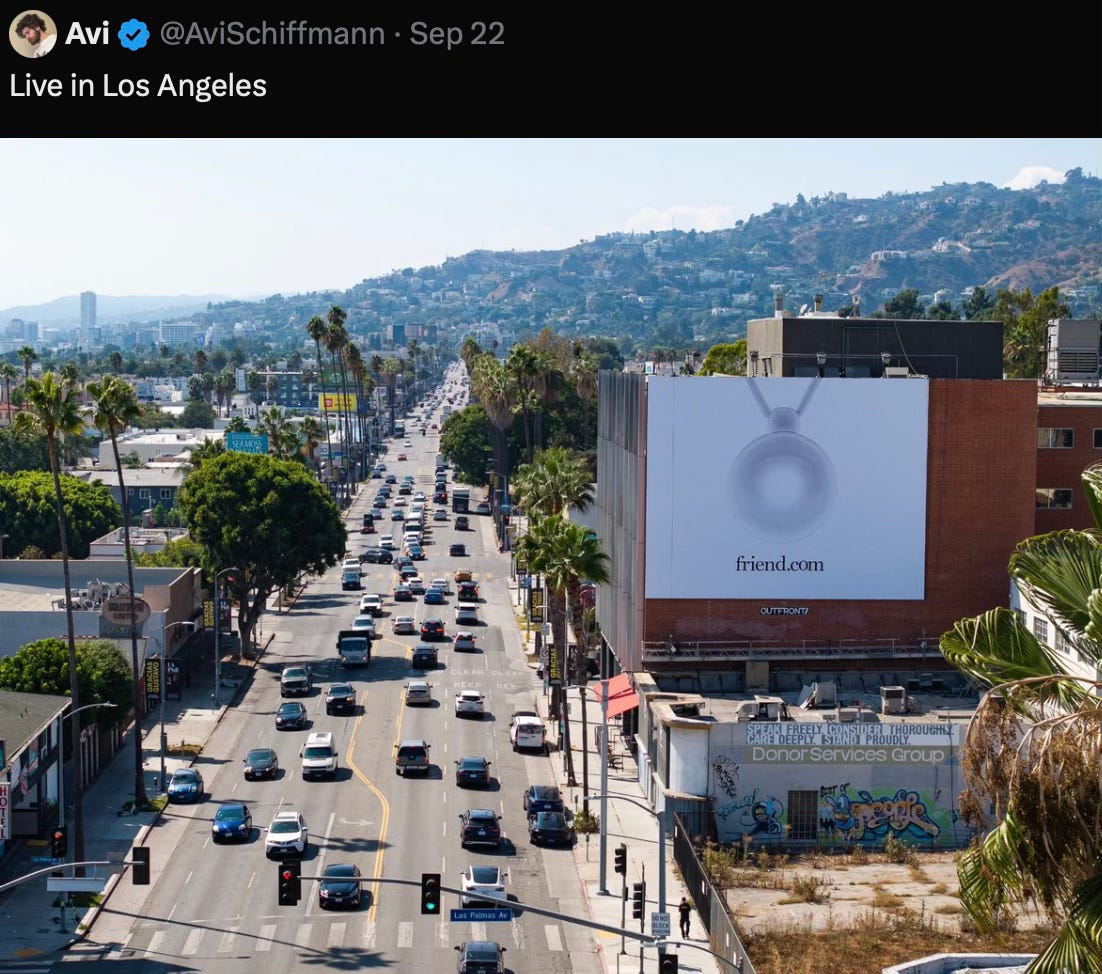
The strange thing about the SF freeways is that only one of these has fallen suspect to this idea. 101 is overrun with billboards, but not just any billboards – all of them are either for AI-native or AI-enabled companies. Many use Gen Z slang or require some technical knowledge to interpret. They are built by coders, for coders – or at least, by the tech ecosystem for the tech ecosystem. These billboards appear as you take 101 north to San Francisco and enter the city, or as you pass out of the city onto the Bay Bridge and into Berkeley/Oakland. In this case, a picture is worth a thousand words: please see a selection of some of my favorite billboards from these last few weeks.
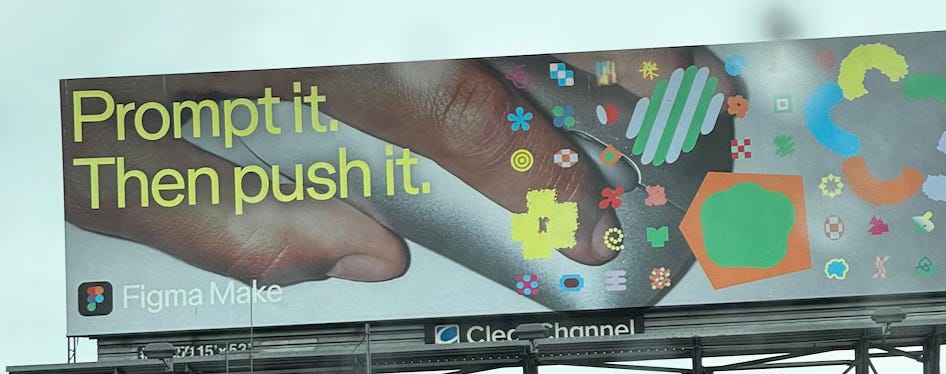

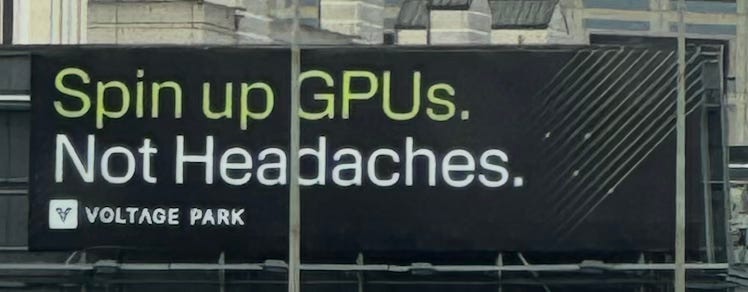
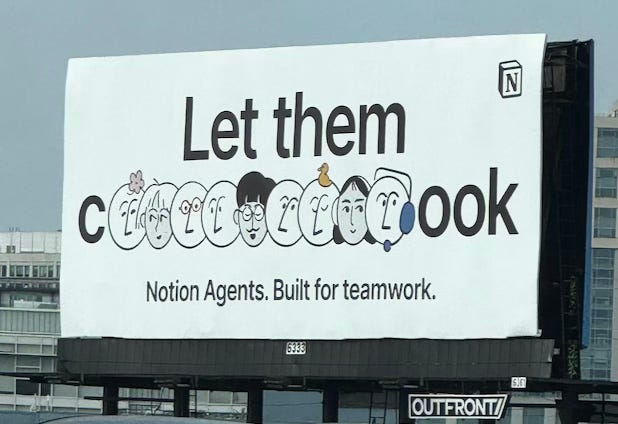
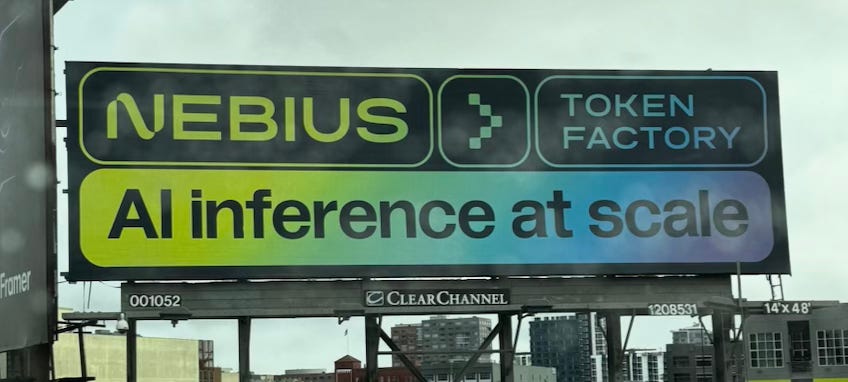
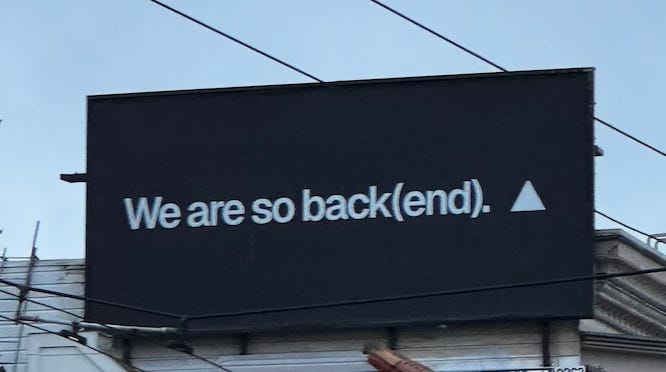
101’s mirror freeway, 280, which drives down the west side of the city and the South Bay, suffers not a single billboard. 280 is faced with rolling golden hills, sparkling softly in golden California sunshine. At one point, the freeway lazily veers left; you come out into a forest of pine trees. It’s like no human has ever set foot in the area except to carve this strange winding road. At night 280 is not quite beautiful but alluring. You hypnotically follow the red taillights of the car in front of you as they splinter the pitch-black night.
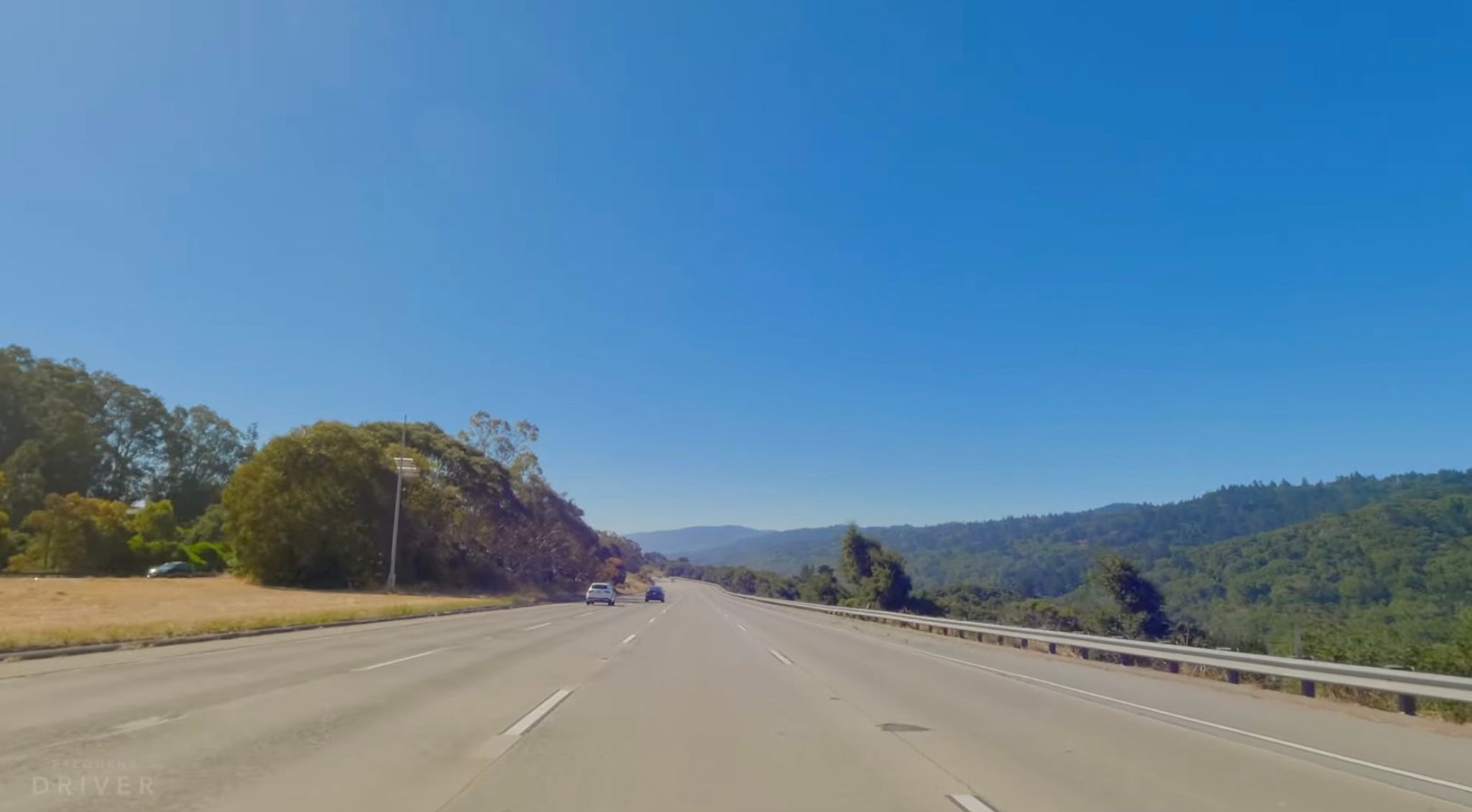
What 280 does have that 101 lacks is hilariously old-school speed traps. California Highway Patrol cars hide in underbrush and after turnoffs to catch cars going over the speed limit, of which they get one every ten minutes, as the speed limit on 280 is seen as much more of a suggestion than a rule. Waze here serves as a necessity: at least fifteen people report cop cars before I ever get the chance to see them every morning on my commute. On 101, this is not a possibility - the traffic is too terrible to ever go faster than 60 mph, and if you did, speed cameras, drones, and Palantir’s great glowing eye all serve as deterrents for even the most foolhardy drivers.
California is a state constantly in tension. It exists both as a place that exalts its maverick nature, priding itself on its old Western history, its Gold Rush lore, its settler aesthetic, while also uneasily incorporating its high-powered, tech-enabled, impersonal future.
280 is the old California: wild, a little ferocious, surfacing the brilliant delusion that the frontier is still yours to claim. 101 is the new California, and the billboards make this clear: thousands of commuters share the same highway, but the ads are only speaking to some of them.
Edited 12/23/2025: I had no idea, but Natasha let me know that the reason I-280 has no billboards is that it’s designated as a “state scenic highway”and billboards are explicitly banned.